A tiny emissions part can make a healthy car act strange after one normal gas stop. When the EVAP purge valve sticks, you may get hard starts, a rough idle, fuel smell, poor mileage, or a check engine light that keeps coming back. The problem feels bigger than it is because the valve sits in the quiet space between fuel vapor control and engine air flow. For U.S. drivers trying to make a smart repair decision, trusted automotive repair guidance can help separate a real fault from a guess at the parts counter.
The trick is not to panic when the dashboard lights up. A bad purge valve is often affordable compared with major engine work, but it can still waste money if you replace it without testing. Some cars need only the valve. Others have cracked hoses, a saturated charcoal canister, wiring trouble, or a loose gas cap setting off the same warning family. That is why canister purge valve symptoms deserve a calm, step-by-step look before anyone starts buying parts.
EVAP Purge Valve Diagnosis Before You Pay for Parts
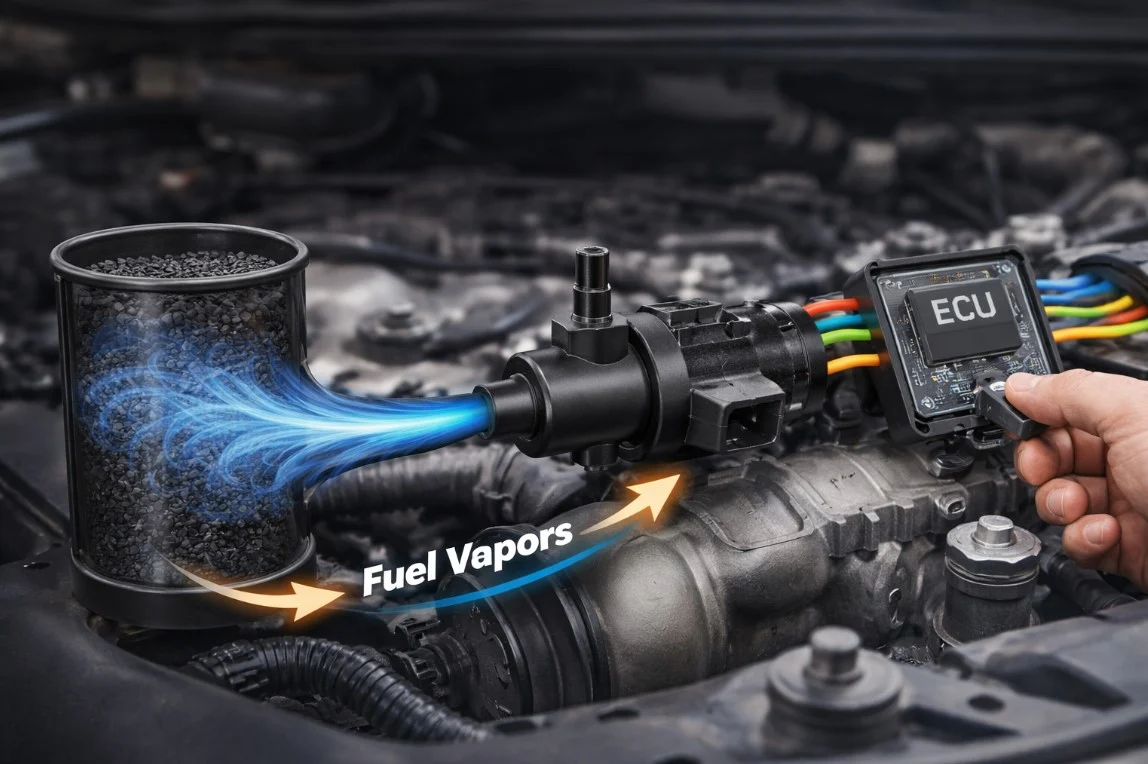
A purge valve problem usually announces itself through behavior, not drama. The car may start fine in the morning, then struggle badly after you fill the tank. It may idle like it has a vacuum leak, then smooth out once you drive away. That pattern matters because the EVAP system moves fuel vapor from the tank into the engine only under controlled conditions, and a stuck valve ruins that timing.
Why check engine light after fueling points to vapor control
The check engine light after fueling is one of the most common clues because refueling changes pressure inside the fuel tank. When the system cannot seal, purge, or read pressure the way the computer expects, it stores a fault code. Many drivers see codes such as P0441, P0443, P0455, P0456, or vehicle-specific purge-flow codes.
The light alone does not prove the valve failed. A gas cap, vent valve, damaged hose, tank pressure sensor, or charcoal canister can trigger similar codes. New York’s OBD inspection guidance explains that the EVAP monitor checks both fuel-system integrity and the ability to draw vapor into the engine during normal driving conditions.
A smart shop will not replace the valve only because a scan tool mentions “EVAP.” It will test command response, inspect lines, and look at fuel tank pressure data. That extra fifteen minutes can save you from replacing a good part.
How rough idle after gas fill changes the story
Rough idle after gas fill is a stronger clue because it connects the symptom to vapor flow. A valve stuck open can let fuel vapor enter the intake when the engine does not want it. The air-fuel mix goes rich, the idle stumbles, and the first start after refueling feels clumsy.
This is the part many drivers miss. A purge valve can fail without making the car undriveable. It can act like a small vacuum leak on Monday, a fuel problem on Wednesday, and a harmless emissions code by Friday. That inconsistency is exactly why people keep clearing the code until inspection month arrives.
A U.S. driver with a late-model sedan may notice the engine cranks longer after topping off the tank. A pickup owner may notice the idle dips at a stoplight after fueling. Both symptoms can point toward the same valve, but the repair should still begin with testing.
Symptoms That Separate a Bad Valve From Other EVAP Faults
The strongest symptoms show up when the valve is stuck open, stuck closed, or electrically dead. Each failure style creates a different kind of trouble. That matters because a stuck-open valve can affect drivability, while a stuck-closed valve may mainly affect emissions testing and stored codes.
What canister purge valve symptoms feel like on the road
The easiest mistake is treating every EVAP warning as “not urgent.” Some are mild. Others affect how the engine runs. Canister purge valve symptoms often include hard starting after fuel stops, idle shake, fuel smell near the vehicle, reduced fuel economy, and a repeating check engine light.
A stuck-open valve can feed vapor into the engine at the wrong time. The engine computer then tries to correct the mix, and you feel the correction as uneven idle or hesitation. It is not a huge failure, but it makes the car feel untrustworthy.
A stuck-closed valve causes a different kind of headache. Fuel vapors stay trapped instead of being burned under normal operation. The vehicle may drive fine, yet it can fail an emissions inspection because the computer knows the system did not behave correctly during its self-test.
Why fuel smell does not always mean a leak
Fuel odor scares people because it feels like raw fuel is escaping. Sometimes it is. Other times, the charcoal canister is loaded with vapor, the vent path is restricted, or the valve is not cycling correctly. That is why smell should start an inspection, not end the diagnosis.
Topping off the tank can make this worse. Once the pump clicks off, adding more fuel can push liquid gasoline into parts of the vapor system designed for fumes. That can damage the charcoal canister and make a simple valve job turn into a bigger repair.
A careful technician will inspect hoses before blaming the valve. Rubber lines crack with age, plastic fittings get brittle, and rodents can chew vapor lines under the car. The valve may still be bad, but the surrounding system decides whether the fix lasts.
Replacement Cost, Labor Time, and the Price Traps
Cost is where this repair gets interesting. The part may be small, but access changes everything. On some vehicles, the valve sits near the engine and takes little time to replace. On others, the repair involves tight packaging, extra covers, or more labor to confirm the fault.
What purge valve replacement cost looks like in the U.S.
A national estimate from RepairPal lists purge valve replacement cost at about $201 to $240 on average, with labor around $61 to $90 and parts around $139 to $150, before taxes and location-based fees. Vehicle-specific numbers vary, with examples such as a Honda Civic at about $189 to $231 and a Ford Escape at about $258 to $303.
That range is a useful starting point, not a promise. A dealership in Los Angeles, an independent shop in Ohio, and a mobile mechanic in rural Georgia may quote different totals for the same part. Labor rate, part brand, diagnostic fee, and local taxes all change the invoice.
The trap is approving the repair without asking what was tested. A cheap valve installed on a guessed diagnosis is still expensive if the light returns. The better question is simple: “What test confirmed the valve failed?”
When the charcoal canister makes the bill jump
The charcoal canister is the expensive neighbor in this system. If liquid fuel entered it, or if the canister is cracked or restricted, replacing the purge valve alone may not solve the issue. RepairPal estimates fuel evaporative canister replacement around $530 to $616 on average, before taxes, fees, and related repairs.
That price gap explains why diagnosis matters. A driver may walk in expecting a small repair and leave with a bigger quote because the canister is damaged. The uncomfortable truth is that sometimes the purge valve is only the messenger.
A fair shop will show the reasoning. It may perform a smoke test, command the valve with a scan tool, check for vacuum when the valve should be closed, and inspect the canister for fuel saturation. That process protects both sides of the counter.
Repair Decisions That Keep the Problem From Coming Back
The best repair is not always the fastest repair. A new valve can clear the code for a few drive cycles, then the warning light can return if the root cause sits elsewhere. The goal is to fix the system, not win a one-week silence from the dashboard.
Why recalls and service bulletins matter first
Vehicle history can change the whole repair plan. In June 2026, Ford recalled more than 255,000 U.S. Focus vehicles tied to a canister purge valve issue that could lead to stalling, an illuminated malfunction light, or inaccurate fuel gauge readings, according to reporting on the NHTSA notice. Dealers were set to update powertrain control module software free of charge for affected vehicles.
That example is a reminder, not a Ford-only warning. Before paying out of pocket, check for open recalls through your VIN. A dealer service department can also look for technical service bulletins that explain known patterns on your year, make, and model.
The counterintuitive move is to slow down before buying the cheapest part. If your vehicle has a known software, harness, or design issue, the cheapest repair may be the one that starts with paperwork.
How to talk to the mechanic without sounding unsure
Clear questions get better answers. Ask whether the valve was tested open and closed, whether the shop checked hoses, and whether a smoke test was needed. Ask if the diagnostic fee applies toward the repair. Those questions signal that you want accuracy, not a parts-throwing contest.
DIY replacement can make sense on vehicles where the valve is easy to reach. Many owners can handle a simple engine-bay purge solenoid with basic hand tools. Still, the diagnosis should come first, because replacing a reachable part does not prove it was the failed part.
The best next step is boring in the right way. Scan the codes, record freeze-frame data, inspect the gas cap and hoses, test the valve, then replace only what failed. If your car has repeat hard starts after refueling, poor idle, and stored vapor-system codes, the EVAP purge valve deserves serious attention before a small fault grows into a costly chase.
Frequently Asked Questions
What are the first signs of a bad purge valve?
Hard starting after refueling, a shaky idle, a fuel smell, lower mileage, and a returning check engine light are common early signs. The pattern after gas fill-ups matters most because the fault often appears when tank pressure and vapor flow change.
Can I drive with a bad canister purge valve?
You can often drive short distances, but ignoring it is not smart. A stuck valve can affect idle quality, fuel economy, emissions readiness, and inspection results. If the car stalls, smells strongly of fuel, or runs poorly, get it checked soon.
Why does my car start rough after filling the gas tank?
Fuel vapor may be entering the intake at the wrong time. That can create a rich mixture and make the engine stumble right after refueling. A stuck-open purge valve is a common suspect, but the vent valve, canister, and hoses still need inspection.
How much does it cost to replace a purge valve?
Many U.S. repairs fall around the low hundreds, but the total depends on the vehicle and shop rate. Some models are cheaper because the valve is easy to reach. Others cost more because diagnosis or access takes longer.
Will a bad purge valve fail an emissions test?
Yes, it can. The car may drive normally but still fail because the computer cannot complete or pass EVAP monitor checks. In states with OBD-based inspections, unresolved vapor-system codes can block a passing result.
Can a loose gas cap mimic purge valve problems?
A loose or damaged gas cap can trigger EVAP leak codes that look similar at first. That is why the cap should be checked before parts are replaced. A purge-flow code, hard starts after fueling, and failed valve testing point more strongly toward the valve.
Should I replace the purge valve myself?
DIY can work if the valve is easy to reach and you have confirmed the fault. The risk is replacing it based only on a code. A scan tool, basic inspection, and a simple valve test give you a better chance of fixing it once.
How do I prevent EVAP system problems after repair?
Stop topping off the tank after the pump clicks, keep the gas cap seal clean, and repair warning lights before inspection season. Small vapor-system problems become expensive when fuel enters the charcoal canister or cracked hoses go unnoticed.